
Scared of Therapy? Here’s What Actually Happens
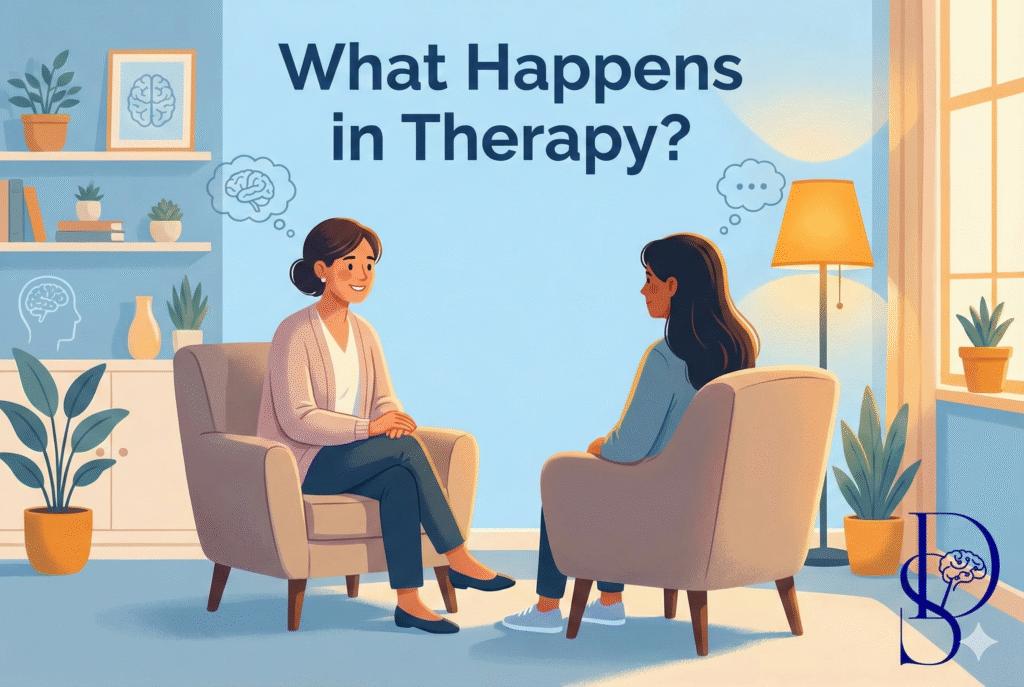
Mental health is as important as physical health, yet many people feel unsure about seeking help. Therapy—whether through counseling or psychiatry—can provide the support, guidance, and tools needed to navigate life’s challenges. If you’re considering therapy, it’s normal to wonder: What actually happens in a session? 1. Understanding Therapy Therapy is a professional, confidential process where trained mental health experts help you understand your thoughts, feelings, and behaviors. The goal is not just to talk—it’s to identify patterns, develop coping strategies, and create meaningful change in your life. 2. Types of Therapy Counseling: Focuses on emotional support, coping strategies, and problem-solving. Ideal for stress, anxiety, relationship challenges, or life transitions. Psychiatry: Involves diagnosis and treatment of mental health conditions, including prescribing medication if needed. Psychiatrists often combine therapy with medical management for comprehensive care. 3. What Happens in a Session Every session is tailored to the individual, but here’s a typical flow: Check-in: You discuss how you’ve been feeling since the last session. Goal Setting: The therapist identifies your short-term and long-term objectives. Discussion & Reflection: You explore thoughts, emotions, and behaviors in a safe, non-judgmental space. Strategies & Tools: Therapists introduce coping techniques like mindfulness, cognitive exercises, or behavioral changes. Homework/Practice: You may be encouraged to try new habits or exercises between sessions. 4. What Therapy Feels Like Therapy is collaborative. You are an active participant, and progress often takes time. Initially, you may feel hesitant or emotional, which is normal. Over time, many people experience clarity, relief, and improved coping skills. 5. Benefits of Therapy Better understanding of your emotions Healthier coping with stress and anxiety Improved relationships and communication Support with mental health conditions like depression, OCD, or PTSD Guidance to make positive life changes 6. Tips Before Your First Session Be honest about your feelings and experiences. Set clear goals for what you hope to achieve. Remember that therapy is a safe space—there’s no judgment. Give yourself time; meaningful change usually happens gradually. 7. When to Seek Help Consider therapy if you: Struggle with daily stress or anxiety Experience prolonged sadness or low motivation Face difficulty in relationships Have recurring negative thoughts Want personal growth or self-understanding 8. Finding the Right Therapist Choosing the right therapist is key. Look for someone licensed, experienced, and someone you feel comfortable talking to. Trust and rapport are central to effective therapy. Conclusion Therapy is not a sign of weakness—it’s a proactive step toward mental wellness. With counseling or psychiatric care, you can learn to navigate life’s challenges, improve emotional resilience, and create a more balanced, fulfilling life. Contact Dr. Soumya Dash in Bhubaneswar If you’re ready to take the first step toward better mental health, schedule a session today:📞 Call: +91 9568830001📧 Email: care@remindcentre.com📍 Address: N1, 270, CRP – DAV Rd, Block Number 4, IRC Village, Nayapalli, Bhubaneswar
How to Stop Stress With Techniques That Actually Work
In today’s fast-paced world, stress has become a constant companion. Work pressures, personal commitments, and the never-ending flow of information can leave anyone feeling overwhelmed. While many self-care tips circulate online, not all are effective. This blog explores evidence-backed stress management techniques that truly work, so you can take control of your mental and physical well-being. 1. Mindfulness Meditation Why it works:Research shows that practicing mindfulness meditation for as little as 10–20 minutes daily reduces cortisol (stress hormone) levels, improves focus, and enhances emotional resilience. How to do it: Sit comfortably in a quiet space. Focus on your breath, gently bringing your attention back when your mind wanders. Start with 5–10 minutes and gradually increase. 2. Regular Physical Activity Why it works:Exercise triggers the release of endorphins, the body’s natural mood boosters. Studies also indicate that consistent physical activity improves sleep, reduces anxiety, and enhances cognitive function. Simple exercises to start: Walking or jogging for 30 minutes daily Yoga or stretching routines Strength training twice a week 3. Prioritize Sleep Why it works:Lack of quality sleep increases stress levels and impairs decision-making. Evidence suggests that maintaining a regular sleep schedule of 7–9 hours per night significantly lowers stress and improves mood. Tips for better sleep: Avoid screens at least an hour before bedtime Maintain a consistent sleep schedule Create a calm, dark, and cool bedroom environment 4. Practice Gratitude Why it works:Gratitude exercises, such as writing daily journal entries of things you are thankful for, can rewire the brain to focus on positive aspects of life. Research shows this simple practice reduces stress and increases overall well-being. How to start: Keep a gratitude journal Reflect on three positive moments each day Express appreciation to friends or family 5. Deep Breathing and Relaxation Techniques Why it works:Deep breathing activates the parasympathetic nervous system, which helps calm the mind and reduce stress responses. Techniques like diaphragmatic breathing, box breathing, or progressive muscle relaxation are scientifically proven to lower anxiety. Quick exercise: Inhale for 4 counts Hold for 4 counts Exhale for 4 counts Pause for 4 counts Repeat 5–10 times 6. Limit Digital Overload Why it works:Constant notifications and screen time increase mental fatigue and stress. Research shows that taking breaks from digital devices can improve focus and reduce anxiety. Tips to manage screen time: Schedule device-free hours daily Avoid social media before bed Use apps to monitor usage 7. Social Connection Why it works:Strong social support networks buffer the effects of stress and improve resilience. Engaging with friends, family, or community groups promotes positive emotions and mental clarity. Ways to stay connected: Schedule regular calls or meet-ups Join clubs, groups, or online communities Volunteer or participate in local events Conclusion Self-care is not a luxury—it’s a necessity. By integrating these evidence-backed stress management techniques into your daily routine, you can reduce anxiety, improve mental clarity, and lead a more balanced, fulfilling life. Start small, stay consistent, and observe the transformation over time. Contact Us 📞 Call: +91 9568830001📧 Email: care@remindcentre.com📍 Address: N1, 270, CRP – DAV Rd, Block Number 4, Block N1, IRC Village, Nayapalli, Bhubaneswar, Odisha 751015
Proven Signs You Need a Mental Health Expert
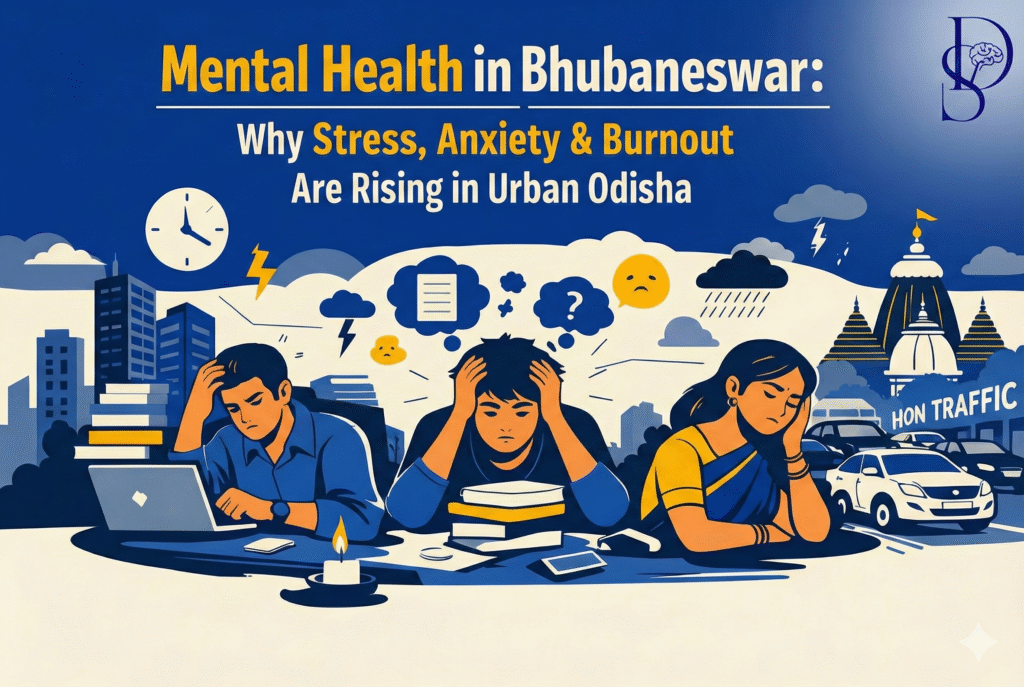
Bhubaneswar has rapidly evolved from a quiet temple city into a growing urban and professional hub. With expanding IT parks, educational institutions, and competitive workplaces, the pace of life has changed dramatically. While development brings opportunity, it has also introduced a silent rise in stress, anxiety, and burnout among residents of urban Odisha. Mental health challenges are no longer limited to a few—they affect students, working professionals, homemakers, and even retirees. Understanding why this rise is happening is the first step toward addressing it. 1. Rapid Urbanisation and Lifestyle Changes Bhubaneswar’s transformation into a smart city has brought longer working hours, increased screen time, and reduced physical activity. Many individuals now juggle demanding jobs, family responsibilities, and constant digital connectivity, leaving little room for rest or emotional processing. This constant mental stimulation often leads to chronic stress, disturbed sleep, and emotional exhaustion. 2. Academic and Career Pressure Among Youth Students in Bhubaneswar face intense academic pressure—from competitive entrance exams to career uncertainty. Parents often expect high performance, leaving little space for failure or emotional vulnerability. Over time, this pressure can manifest as anxiety disorders, low self-esteem, panic attacks, or burnout even at a young age. 3. Changing Family Structures Traditional joint family systems are gradually being replaced by nuclear families. While independence has its advantages, it also reduces emotional support systems. Many individuals hesitate to discuss mental health concerns at home due to fear of judgement or misunderstanding, leading to emotional isolation. 4. Cultural Stigma Around Mental Health In many Odia households, mental health issues are still misunderstood or dismissed as “overthinking” or “lack of willpower.” This stigma prevents people from seeking professional help early. Delayed intervention often worsens symptoms, making recovery more challenging. 5. Work-Life Imbalance and Burnout With increasing competition and job insecurity, professionals in Bhubaneswar often push themselves beyond healthy limits. Long hours, constant availability, and lack of boundaries contribute to burnout—a state of physical, emotional, and mental exhaustion. Burnout is not laziness; it is a serious mental health condition that requires attention. 6. When Should You Seek Help? You should consider professional mental health support if you experience: Persistent stress or anxiety Emotional numbness or irritability Sleep disturbances Loss of motivation or interest Difficulty managing daily responsibilities Seeking help early can prevent long-term mental health complications. Conclusion Mental health challenges in Bhubaneswar are real, growing, and deeply connected to modern urban living. Acknowledging these issues without shame is essential for individual and societal well-being. Mental health care is not a luxury—it is a necessity. With timely support, awareness, and compassionate care, individuals can regain balance, clarity, and emotional strength. 📞 Contact Details If you or your loved ones are experiencing mental health concerns, professional support is available. Call: +91 9568830001Email: care@remindcentre.comAddress: N1, 270, CRP – DAV Road, Block Number 4, Block N1IRC Village, Nayapalli, Bhubaneswar, Odisha – 751015
6 Hidden Signs of Depression Most People Miss
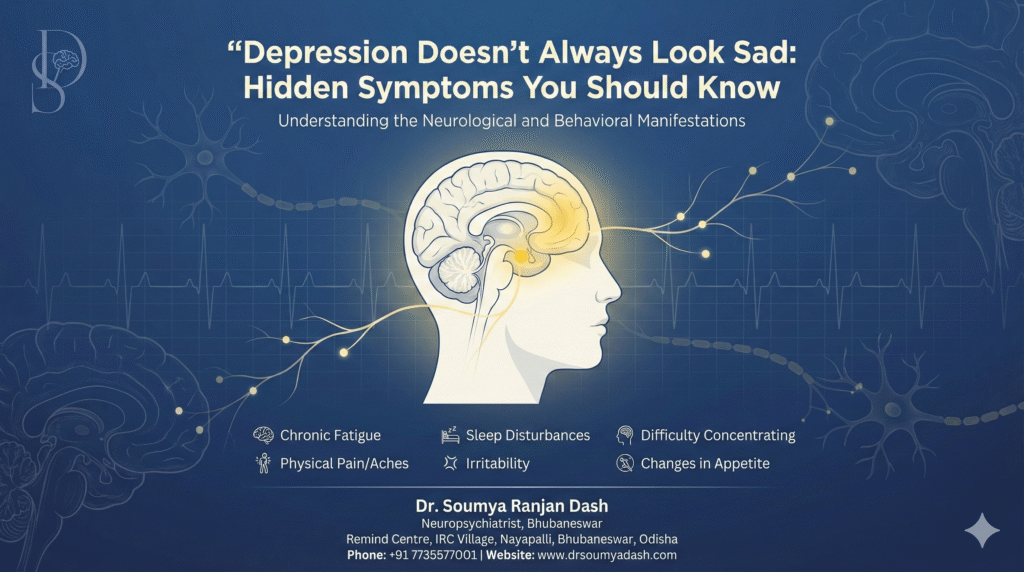
When most people hear the word depression, they imagine a person who is crying, isolated, or visibly sad.But in reality, depression often hides behind normal-looking behaviour. Many individuals continue working, smiling, and interacting socially — while struggling silently inside. This is known as “high-functioning depression” or “masked depression.”Understanding these hidden symptoms is crucial because untreated depression can worsen over time and affect physical, emotional, and social well-being. 1. Constant Fatigue That Doesn’t Improve With Rest Fatigue is one of the most overlooked signs of depression.Even after sleeping enough hours, a person may feel: Zero energy Heaviness in the body Difficulty getting out of bed Exhaustion after small tasks This happens because depression disrupts brain chemicals that regulate energy levels. 2. Losing Interest in Things You Once Enjoyed A clinical symptom called anhedonia — the inability to feel pleasure.Patients often say: “I don’t feel like meeting anyone.” “My hobbies don’t excite me anymore.” “Even good news doesn’t make me happy.” This is a strong clinical indicator of depression, even when the person looks fine externally. 3. Unexplained Body Pain Depression affects the mind and body.It can cause: Headaches Back or neck pain Muscle stiffness Digestive discomfort When routine tests show nothing abnormal, but symptoms persist, depression may be the underlying reason. 4. Irritability and Anger Instead of Sadness Not everyone shows sadness.Some individuals exhibit: Sudden anger Short temper Impatience Restlessness In many adults and teenagers, irritability is the primary sign of depression. 5. Trouble Concentrating Depression can interfere with cognitive functions such as: Memory Focus Decision-making Problem-solving People may feel mentally “foggy” or slow, which affects work and daily life. 6. Changes in Appetite or Weight Both overeating and loss of appetite can be symptoms.Patients may notice: Weight gain due to emotional eating Weight loss from lack of interest in food These changes often occur gradually and may be misinterpreted as lifestyle issues. 7. Sleep Disturbances Depression can show up as: Insomnia (difficulty sleeping) Early-morning awakening Oversleeping Sleep and mood are deeply connected — when sleep is affected without an obvious reason, depression should be considered. 8. Feeling Emotionally “Numb” Instead of sadness, some people experience: Emotional flatness Lack of excitement A feeling of emptiness Reduced emotional response This numbness is a classic hidden symptom. Why These Symptoms Are Often Missed Because many patients continue to function normally — going to work, caring for family, participating in daily routines — their depression remains undetected. Family members may say: “But you look normal.” “You seem fine outside.” This mismatch between appearance and internal struggle makes diagnosis difficult. When Should You Seek Help? You should seek psychiatric consultation if: These symptoms persist for more than two weeks They interfere with work, sleep, or relationships You feel overwhelmed, exhausted, or disconnected from yourself Early evaluation helps prevent worsening symptoms and improves long-term outcomes. Consult an Expert in Bhubaneswar Dr. Soumya Ranjan DashRenowned Neuropsychiatrist, BhubaneswarRemind Centre, IRC Village, Nayapalli, Bhubaneswar, Odisha📞 +91 7735577001🌐 www.drsoumyadash.com Dr. Dash specializes in diagnosing and treating depression, anxiety, and other mental health conditions with a scientific, compassionate approach.