
Why Your Body Hurts When Your Mind Won’t Rest
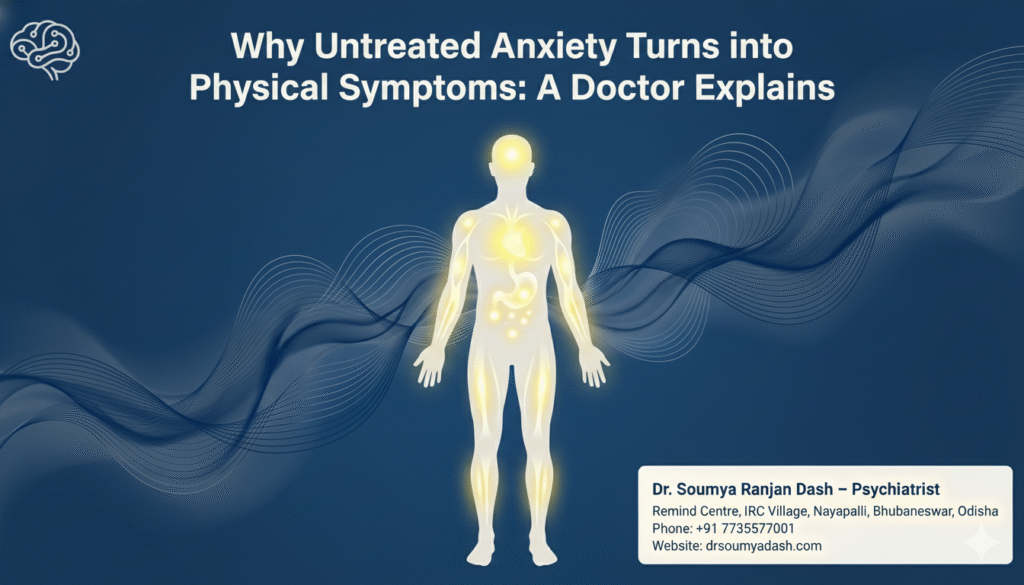
Anxiety is often seen as a purely emotional issue — constant worry, overthinking, restlessness, or fear. But when anxiety goes untreated for too long, the body begins to speak louder than the mind. Headaches, chest tightness, stomach issues, fatigue, or unexplained pain are often signs that anxiety has moved beyond emotions and is affecting your physical health. Let’s understand why untreated anxiety shows up in the body, explained in simple language from a medical perspective. 🧠 1. Anxiety Activates the Body’s Alarm System Every time you feel fear or worry, your brain activates the fight-or-flight response. This causes: Faster heartbeat Rapid breathing Sweating Muscle tension Short-term, this keeps you safe.Long-term, it becomes damaging. Your body cannot stay in “emergency mode” without consequences. 🔥 2. Constant Stress Releases Too Much Cortisol When anxiety is ongoing, your adrenal glands keep producing cortisol, the stress hormone. High cortisol for weeks or months leads to: Headaches High blood pressure Weight changes Sleep problems Low immunity Constant fatigue This is why anxious people often feel “sick” or burnt out. 💓 3. Your Heart Works Harder Than It Should Anxiety makes your heart beat faster to prepare the body for danger. Untreated, it may lead to: Chest heaviness Palpitations Breathlessness Dizziness Many people mistake anxiety symptoms for heart disease.A proper medical evaluation can differentiate the two. 🤢 4. Anxiety Directly Affects Your Stomach Your brain and gut communicate constantly through the gut–brain axis. Untreated anxiety disturbs digestion and causes: Nausea Stomach cramps IBS (Irritable Bowel Syndrome) Gas and bloating Diarrhea or constipation This is why your stomach reacts instantly during stressful times. 💭 5. Muscle Tension Turns Into Real Pain When anxious, your muscles tighten — especially around the neck, shoulders, and back. Long-term muscle tension leads to: Body aches Jaw tightness or teeth grinding Migraines Nerve-like pain A stressful mind creates a painful body. 😵 6. Poor Sleep Makes Symptoms Worse Anxiety makes it hard to: Fall asleep Stay asleep Get deep sleep Lack of sleep increases: Irritability Body pain Digestion problems Brain fog Fatigue This becomes a never-ending cycle. 🧩 7. Why It Gets Worse Over Time If untreated, the brain starts rewiring itself to stay in survival mode. This leads to: Chronic worry Panic attacks Frequent physical symptoms Emotional burnout Higher risk of depression The longer anxiety stays untreated, the stronger it becomes. 🌿 8. Good News: Physical Symptoms Improve When Anxiety Is Treated With proper treatment, lifestyle changes, and emotional support, the physical symptoms gradually reduce or disappear. Effective methods include: Therapy Medication (when needed) Deep-breathing exercises Yoga & relaxation Sleep improvement Managing screen time Healthy diet Treating anxiety treats the body too. 👨⚕️ When to Consult a Psychiatrist You should seek help if anxiety causes: Constant physical symptoms Panic attacks Unexplained pains Sleep issues Fear or worry affecting daily life Sudden emotional breakdowns Early treatment prevents long-term complications. ⭐ Consult Dr. Soumya Ranjan Dash for Anxiety & Mental Health Care If anxiety is affecting your physical or emotional well-being, expert intervention can help you recover faster. 📌 Dr. Soumya Ranjan DashRenowned Psychiatrist in Bhubaneswar, OdishaAssociated With: SUM Hospital, Bhubaneswar 📍 Clinic Address:Remind Centre,IRC Village, Nayapalli, Bhubaneswar, Odisha 📞 Phone: +91 7735577001🌐 Website: drsoumyadash.com Get compassionate care, correct diagnosis, and evidence-based treatment for a healthier mind and body.
The Hidden Ways Stress Is Reshaping Your Brain Daily
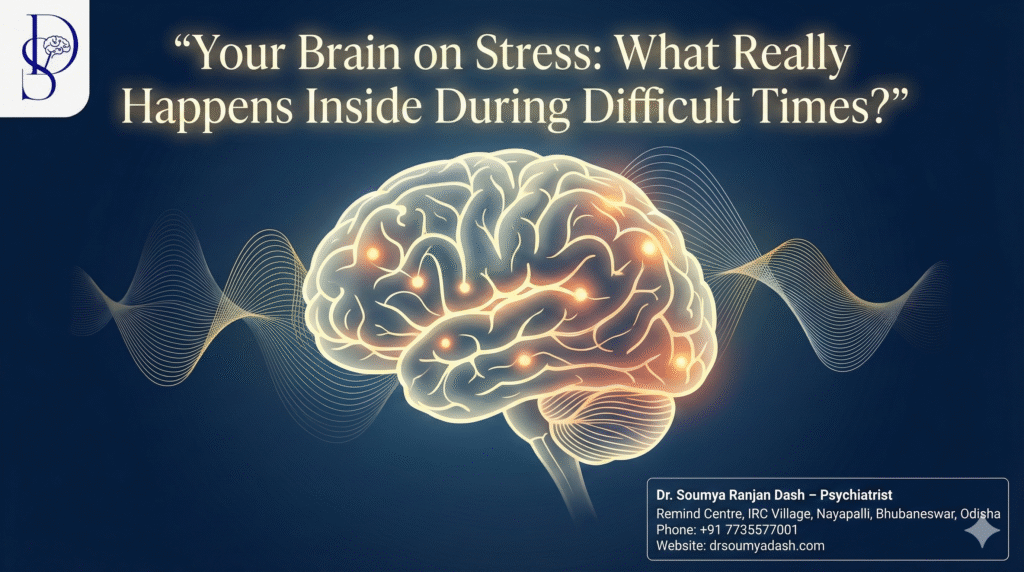
Stress is not just an emotion — it is a complete mind–body reaction. When life becomes overwhelming, your brain activates a powerful internal system designed to help you survive. But when stress becomes constant, this system starts affecting your mental, emotional, and physical well-being. Let’s understand what really happens inside your brain during stressful situations. 🧠 1. The Alarm System Activates: The Amygdala Takes Charge The amygdala is your brain’s “danger signal.”When you experience stress — a conflict, workload pressure, financial worry — it reacts instantly. What it does: Sends an alert across your brain Creates fear, worry, and panic Triggers the fight–flight–freeze response This is why stress feels like an instant emotional storm. 🔔 2. Stress Hormone Surge: Cortisol Rises Immediately after the amygdala reacts, your adrenal glands release cortisol. Short-term cortisol helps: Increase alertness Boost rapid decision-making Improve reaction time But chronic cortisol causes: Anxiety Fatigue Mood changes Low immunity Memory issues This is why long-term stress makes you feel mentally exhausted. 🧠 3. Decision-Making Weakens: Prefrontal Cortex Slows Down The prefrontal cortex controls: Focus Emotional regulation Logical thinking Problem-solving When stress is high, it becomes less active. Effects: Poor focus Impulsive decisions Irritability Difficulty thinking clearly This is why even simple tasks feel impossible under pressure. 🧩 4. Memory & Learning Get Affected: Hippocampus Reacts The hippocampus stores memories and helps with emotional balance. Short-term stress: helps you remember important events. Long-term stress: Shrinks the hippocampus Weakens memory Makes negative thoughts stronger Increases depression and anxiety risk This is why stressful memories feel sharper than pleasant ones. ⚡ 5. The Body Enters High Alert Mode Stress triggers the autonomic nervous system, leading to: Fast heartbeat Muscle tightness Sweating Stomach discomfort Poor sleep Headaches Your brain tells your body to stay “ready for danger” even when the threat is emotional, not physical. 🌿 6. Chronic Stress Literally Rewires the Brain If stress continues for weeks or months: The amygdala becomes hyperactive → more fear & anxiety The prefrontal cortex becomes weaker → emotional imbalance The hippocampus becomes smaller → memory & mood issues The good news:🔹 With proper care, the brain can rebuild and recover. 🌈 7. How to Protect Your Brain from Stress Doctor-recommended stress-protection habits: Deep breathing Meditation Regular exercise Good sleep hygiene Digital detox Talk therapy Staying socially connected Balanced diet & hydration Small habits → Big changes in brain health. 👨⚕️ When to Consult a Psychiatrist Seek help if stress causes: Panic attacks Overthinking Emotional breakdowns Sleep problems Loss of motivation Relationship issues Physical symptoms with no medical cause A psychiatrist can help prevent stress from turning into more serious mental health disorders. ⭐ Consult Dr. Soumya Ranjan Dash for Stress & Mental Health Care If stress, anxiety, or emotional overwhelm is affecting your daily life, expert help can make a life-changing difference. 📌 Dr. Soumya Ranjan DashRenowned Psychiatrist in Bhubaneswar, OdishaAssociated With: SUM Hospital, Bhubaneswar 📍 Clinic Address:Remind Centre,IRC Village, Nayapalli, Bhubaneswar, Odisha 📞 Phone: +91 7735577001 Get the right guidance, compassionate care, and evidence-based treatment for a healthier mind.
5 Reasons Odisha Needs Mental Health Awareness Now
In recent years, Odisha has witnessed a silent mental-health crisis. While the state continues to grow economically and culturally, emotional well-being often remains neglected. The growing cases of anxiety, depression, addiction, and stress-related disorders highlight an urgent need to prioritize mental health awareness. Why Mental Health Awareness Matters Mental health affects every aspect of life — from relationships and work performance to physical well-being. Yet, social stigma and lack of understanding often prevent people from seeking help. By spreading awareness, we can create a society that values emotional strength as much as physical fitness. The Current Scenario in Odisha Rising stress and lifestyle changes: Urbanization and competitive work environments have led to an increase in anxiety and depression among youth and professionals. Limited access to care: Many districts still lack qualified mental-health professionals and awareness programs. Social stigma: Cultural beliefs and fear of judgment often stop individuals from consulting a psychiatrist. Common Mental-Health Conditions in Odisha Some of the most frequently observed conditions include: Anxiety Disorders – constant fear, worry, and restlessness. Depression – prolonged sadness, loss of interest, or hopelessness. Substance Abuse – increasing alcohol and drug use as coping mechanisms. Sleep Disorders – disrupted sleep cycles due to stress and lifestyle imbalance. Role of Awareness Campaigns and Education Educating families, workplaces, and schools about the importance of early intervention can save lives. Campaigns, community discussions, and social-media initiatives can help normalize conversations around mental health. When to Seek Professional Help If you notice symptoms like persistent sadness, panic attacks, mood swings, or difficulty concentrating, it’s time to reach out to a mental-health expert. Early diagnosis and treatment significantly improve recovery outcomes. Dr. Soumya Ranjan Dash — Promoting Mental Well-Being in Odisha As a renowned psychiatrist in Bhubaneswar, Dr. Soumya Ranjan Dash provides compassionate and evidence-based treatment for a wide range of psychiatric conditions. His approach focuses on holistic healing, combining therapy, medication, and lifestyle guidance. Take the First Step Towards Mental Wellness Your mental health matters as much as your physical health. Don’t let stigma or fear stop you from getting help. 📍 Consult Dr. Soumya Ranjan Dash, leading Psychiatrist in Bhubaneswar, Odisha.📞 Call +91 9568830001 to book your appointment and begin your journey toward better mental health.
Stop Believing These OCD Lies. Get Real Help Now.
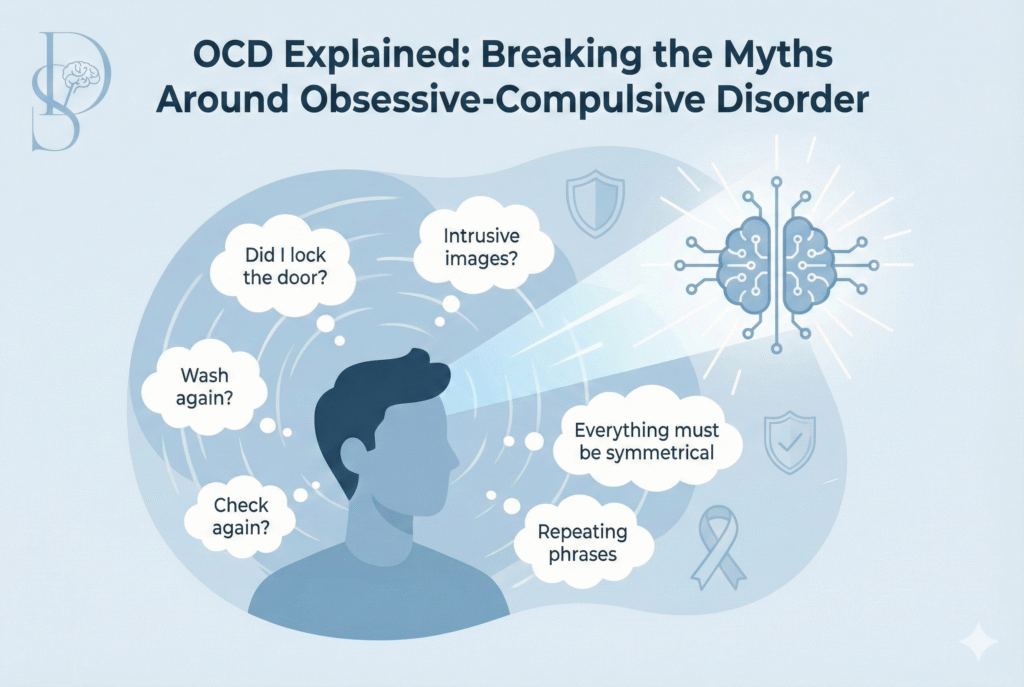
Many people casually say, “I’m so OCD about cleanliness!” — but true Obsessive-Compulsive Disorder (OCD) is far more complex.It’s not just about being neat or organized; it’s a serious mental health condition that can significantly impact daily life. At Dr. Soumya Ranjan Dash’s clinic in Bhubaneswar, patients receive compassionate and scientifically proven care for OCD and related anxiety disorders. This blog helps you understand what OCD really is — and what it isn’t. What Is OCD? Obsessive-Compulsive Disorder (OCD) is a mental health condition marked by unwanted, intrusive thoughts (obsessions) and repetitive behaviors (compulsions). People with OCD feel compelled to perform certain rituals to reduce anxiety caused by their thoughts. For example, repeatedly checking locks or washing hands even when they know it’s unnecessary. These behaviors can take up hours each day, interfere with work, relationships, and overall quality of life. Common Symptoms of OCD OCD symptoms usually appear in two parts — obsessions and compulsions. Common Obsessions: Fear of contamination by germs or dirt Intense need for order or symmetry Intrusive thoughts about harm or violence Doubts about having done something right (like locking the door) Fear of losing control over one’s actions Common Compulsions: Excessive cleaning or hand washing Repeated checking (lights, locks, appliances) Counting, tapping, or repeating words silently Organizing items in a “perfect” or specific way Seeking reassurance repeatedly If these behaviors or thoughts disrupt your routine or cause distress, it’s time to seek OCD Treatment in Bhubaneswar from a mental health specialist. Common Myths About OCD — and the Truth Let’s debunk some popular myths that create confusion and stigma around OCD: ❌ Myth ✅ Reality OCD is just about cleanliness. OCD involves a wide range of obsessions and compulsions, not just hygiene. People with OCD can easily control their thoughts. OCD thoughts are intrusive and uncontrollable without professional help. OCD is rare. OCD affects millions worldwide — it’s a common and treatable condition. Only adults get OCD. OCD can begin in childhood, adolescence, or adulthood. Medication is the only solution. Therapy, especially CBT, is highly effective — sometimes combined with medication. Breaking these myths is the first step toward understanding and supporting those living with OCD. Effective OCD Treatment in Bhubaneswar Dr. Soumya Ranjan Dash offers comprehensive treatment plans that address both the symptoms and the underlying causes of OCD. His approach focuses on long-term recovery and emotional stability. 1. Cognitive Behavioral Therapy (CBT) CBT helps patients identify negative thinking patterns and change their behavioral responses.A specialized form of CBT called Exposure and Response Prevention (ERP) is particularly effective for OCD. 2. Medication Certain antidepressants (SSRIs) may be prescribed to balance brain chemicals linked to obsessive thinking and anxiety.Medication is always customized based on each patient’s needs and medical history. 3. Lifestyle Support & Mindfulness Practicing mindfulness, deep breathing, yoga, and meditation can help reduce stress and obsessive thoughts over time. When to See a Psychiatrist You should seek professional help if: You spend more than an hour daily on repetitive thoughts or behaviors. Your rituals or compulsions interfere with work, studies, or relationships. You feel anxious, frustrated, or ashamed about your thoughts. Ignoring symptoms can worsen the condition. Early OCD Treatment in Bhubaneswar can help you regain control and live freely again. Why Choose Dr. Soumya Ranjan Dash? Dr. Soumya Ranjan Dash, a leading psychiatrist in Bhubaneswar, specializes in the diagnosis and treatment of OCD, anxiety disorders, depression, and personality disorders. He combines advanced psychiatric techniques with compassionate counseling — ensuring every patient receives personalized, confidential, and effective care. Contact Details Clinic: Dr. Soumya Ranjan Dash – Psychiatrist in BhubaneswarLocation: SUM Hospital, Bhubaneswar, OdishaPhone: +91 9568830001