
Understanding Anxiety Disorders: Symptoms, Causes, and Treatment in Bhubaneswar
Feeling anxious before an exam or meeting is normal. But when worry and fear become constant, intense, and hard to control, it may be an anxiety disorder. Anxiety disorders are real medical conditions that affect thoughts, emotions, and physical health. They can cause restlessness, racing heartbeats, and even panic attacks. The good news — they are treatable with the right psychiatric care. At Dr. Soumya Ranjan Dash’s clinic in Bhubaneswar, patients receive compassionate and evidence-based treatment for all forms of anxiety. Common Symptoms of Anxiety Disorders Recognizing symptoms early helps in faster recovery. Watch for these signs: Persistent or excessive worry Rapid heartbeat or chest tightness Restlessness, trembling, or sweating Difficulty concentrating or making decisions Sleep problems or fatigue Feeling tense, irritable, or “on edge” If these symptoms last more than a few weeks or disrupt daily life, it’s time to consult a psychiatrist in Bhubaneswar for diagnosis and treatment. What Causes Anxiety? Anxiety rarely has one single cause. It usually results from a mix of factors, such as: Genetics: Family history of anxiety or depression Brain chemistry: Imbalance of serotonin or dopamine Stress: Work pressure, trauma, or major life events Health conditions: Thyroid issues, heart problems, or chronic illness Substance use: Excess caffeine, alcohol, or drugs Understanding what triggers your anxiety is the first step toward managing it effectively. Best Treatment for Anxiety Disorders in Bhubaneswar Dr. Soumya Ranjan Dash offers personalized treatment plans for patients based on the type and severity of anxiety. His approach blends therapy, medication, and lifestyle changes for complete recovery. 1. Psychotherapy (Talk Therapy) Cognitive Behavioral Therapy (CBT): Helps change negative thought patterns. Exposure Therapy: Reduces fear through gradual, safe exposure. Mindfulness Therapy: Promotes relaxation and self-awareness. 2. Medication (If Required) Medications can help balance brain chemicals and control severe anxiety symptoms. Dr. Dash prescribes them carefully and monitors progress regularly. 3. Lifestyle & Self-Care Practice daily meditation or yoga Exercise regularly Limit caffeine and alcohol Maintain healthy sleep habits Stay connected with loved ones With consistent care, most patients regain full control of their emotions and lives. When Should You Visit a Psychiatrist? You should see a psychiatrist if: Anxiety affects your work, relationships, or studies. You experience panic attacks or constant restlessness. You feel overwhelmed or hopeless frequently. Physical symptoms like sweating, trembling, or dizziness appear without reason. Seeking help early prevents anxiety from worsening and improves long-term well-being. Why Choose Dr. Soumya Ranjan Dash? Dr. Soumya Ranjan Dash is a renowned psychiatrist in Bhubaneswar, known for his expertise in treating anxiety, depression, OCD, bipolar disorder, and PTSD. He provides a safe, non-judgmental space for patients to heal and rediscover balance. His approach combines scientific precision with compassionate care — helping hundreds of patients regain peace of mind. Contact Details Clinic: Dr. Soumya Ranjan Dash – Psychiatrist in BhubaneswarLocation: SUM Hospital, Bhubaneswar, OdishaPhone: +91 9568830001
Doomscrolling and Mental Health: Setting Healthy Boundaries with Social Media
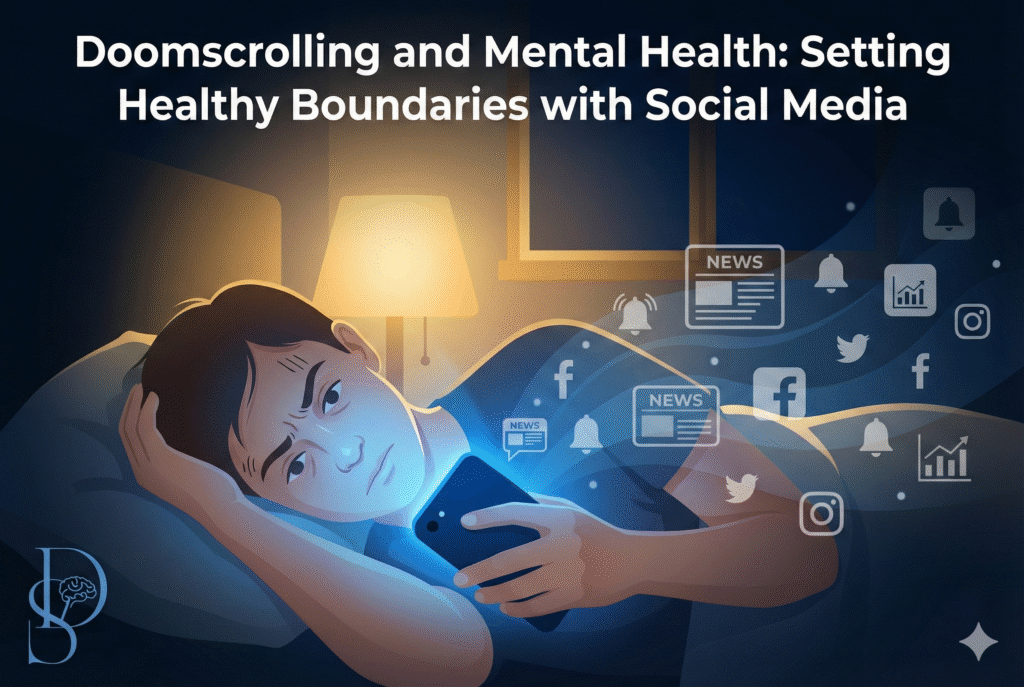
Doomscrolling and mental health are deeply connected, especially in today’s digital world where endless negative news is just a swipe away. When people scroll without stopping, their mind becomes overloaded with information, fear, and uncertainty. As a result, anxiety rises, sleep suffers, and emotional balance weakens. Understanding how doomscrolling affects mental wellness is the first step toward breaking the cycle. What is Doomscrolling and Why Do We Do It? Doomscrolling is precisely what it sounds like: endlessly scrolling through bad news, negative social media posts, or upsetting information. It’s driven by a few psychological factors: Negativity Bias: Our brains are wired to pay more attention to negative information because, from an evolutionary perspective, it signaled danger and potential threats. Uncertainty & Desire for Control: In times of crisis (pandemics, economic downturns, global conflicts), we scroll to gain more information, hoping that knowing more will give us a sense of control over uncontrollable situations. Fear of Missing Out (FOMO): There’s an underlying fear that if we disengage, we might miss crucial information or appear uninformed. Algorithmic Reinforcement: Social media algorithms are designed to keep us engaged. If you click on or dwell on negative content, the algorithm will show you more of it, creating a self-perpetuating cycle. How Doomscrolling Harms Our Mental Health The constant barrage of negative information has tangible effects on our brain and body: Heightened Anxiety and Stress: Continuous exposure to threats (even if they are distant) keeps our nervous system in a state of high alert, increasing cortisol levels and symptoms of generalized anxiety. Increased Depressive Symptoms: A feeling of helplessness, despair, and a loss of hope can deepen existing depressive tendencies or trigger new ones. Sleep Disturbances: Engaging with distressing content, especially before bed, activates the mind and nervous system, making it difficult to fall asleep and reducing sleep quality. Reduced Productivity and Focus: Mental exhaustion from doomscrolling can spill over into daily tasks, impairing concentration and motivation. Distorted Worldview: An overexposure to negative events can make the world seem much more dangerous and bleak than it actually is, leading to cynicism and social withdrawal. Empathy Burnout: While empathy is important, constantly absorbing the suffering of others without a means to act can lead to emotional exhaustion. Setting Healthy Boundaries with Social Media Breaking the doomscrolling habit requires conscious effort and strategic boundaries. Here’s how you can take back control: 1. Implement Time Limits and Scheduled Check-ins Designated News Times: Instead of constant checking, set specific times (e.g., 15 minutes in the morning, 15 minutes in the evening) to catch up on news from trusted sources. Use App Timers: Most smartphones have built-in “Digital Wellbeing” or “Screen Time” features that allow you to set daily limits for social media apps. Adhere to them strictly. No-Phone Zone: Make your bedroom a phone-free sanctuary, especially in the hour before sleep. This is perhaps the most critical boundary for improving sleep and reducing nighttime anxiety. 2. Curate Your Feed Intentionally Unfollow/Mute Negative Accounts: If certain accounts or news sources consistently make you feel anxious or angry, unfollow or mute them. You have control over what enters your digital space. Seek Out Positive Content: Actively follow accounts that promote positivity, provide uplifting content, or offer actionable solutions rather than just problems. Diversify Your Information Sources: Don’t rely solely on social media for news. Subscribe to reputable newsletters, read long-form articles, or listen to podcasts that offer balanced perspectives. 3. Engage in Mindful Consumption Ask Before You Click: Before opening an article or watching a video, ask yourself: “Will this information genuinely serve me, or is it likely to increase my anxiety?” Practice Self-Awareness: Pay attention to how you feel while scrolling. If you notice signs of tension, sadness, or restlessness, take it as a cue to disengage. Quality Over Quantity: Focus on understanding a few key developments from reliable sources rather than skimming countless headlines. 4. Replace the Habit with Positive Alternatives Engage in Hobbies: When you feel the urge to scroll, pick up a book, work on a craft, listen to music, or go for a walk. Connect with Loved Ones: Instead of passive scrolling, actively reach out to friends or family for genuine human connection. Practice Mindfulness: Incorporate short mindfulness exercises or meditation (even 5-10 minutes) into your day to train your attention away from distractions and back to the present. Conclusion While awareness of the world is important, relentless exposure to negativity without a break is detrimental to our mental health. By recognizing the trap of doomscrolling and actively implementing healthy boundaries, we can reclaim our peace of mind, reduce anxiety, and foster a more balanced and resilient relationship with social media and the news. Prioritizing your mental well-being in the digital age is not selfish; it’s essential. If you find that even with boundaries, social media and news consumption are significantly impacting your mental health, leading to persistent anxiety, depression, or sleep issues, it may be beneficial to consult with a mental health professional like Dr. Soumya Dash to explore personalized strategies and support.
Mindfulness vs. Meditation: How Simple Presence Can Reduce Anxiety
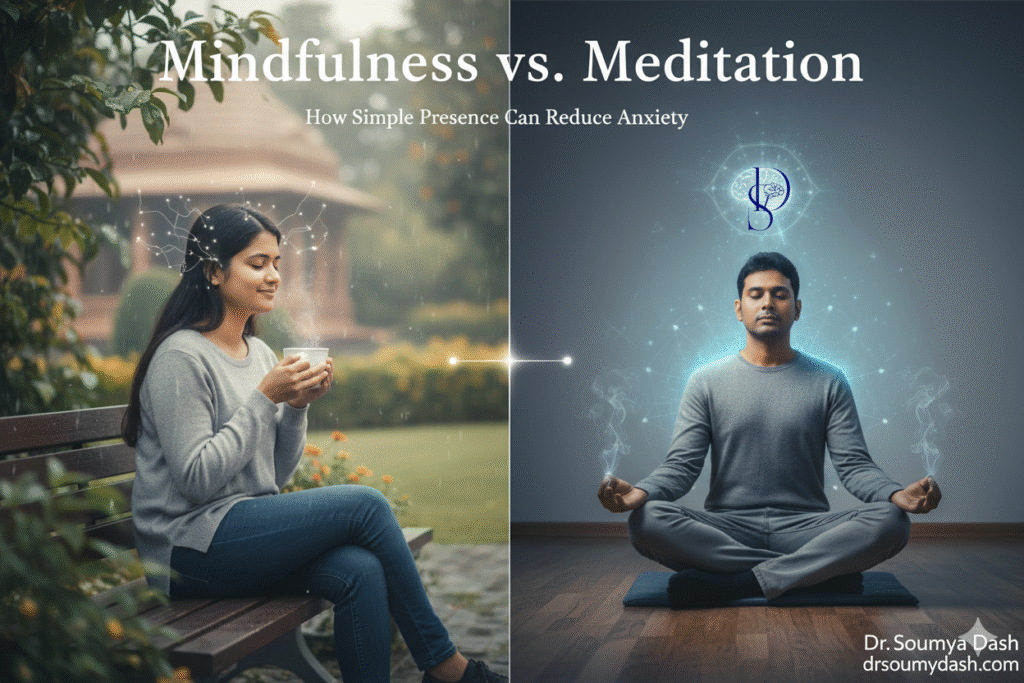
In a world that constantly pulls our attention toward the next notification, the pending task, or yesterday’s regret, anxiety thrives in the space between the past and the future. The simple act of being present is a powerful antidote, and understanding the difference between mindfulness and meditation is the key to unlocking this calm. These terms are often used interchangeably, but they are not the same.1 Think of it this way: Mindfulness is a quality of awareness; meditation is the exercise you do to build that quality. 1. Defining the Difference: Quality vs. Practice Mindfulness (The Quality) Mindfulness is simply the state of being aware of what is happening in the present moment without judgment. It is your natural human ability to pay attention. What it is: A non-judgmental awareness of your thoughts, feelings, bodily sensations, and surrounding environment, as they occur. When you do it: Anytime, anywhere. You can be mindful while brushing your teeth, eating a meal, or walking down the street. The Goal: To interrupt the anxious thought spiral by gently anchoring your mind to the “here and now.” Meditation (The Practice) Meditation is the formal, structured practice or training that deliberately cultivates and deepens mindfulness. What it is: A set-aside time to focus your attention, often on a single anchor like the breath, a sound, or a bodily sensation. When you do it: For a dedicated time (e.g., 5 to 30 minutes) in a quiet setting. The Goal: To train your brain to notice when it wanders (rumination and worry) and to bring it back to the present moment, building mental resilience. 2. The Link to Anxiety Reduction Anxiety is fundamentally a state of mind focused on future threat or past failure (rumination). The beauty of mindfulness is that it shifts your mental energy out of those time zones and into the current moment, where the threat often does not exist. The Anxious Loop vs. The Present Moment Anxious Mindset The Mindfulness Shift Focus: “What if I fail this presentation next week?” (Future Worry) Focus: “I notice the feeling of tightness in my chest right now.” (Present Sensation) Reaction: “I shouldn’t feel this worried; something is wrong with me.” (Judgment) Reaction: “Ah, there’s a thought of worry. I’ll just let it pass.” (Non-Judgmental Observation) Result: Elevated heart rate, shallow breathing, increasing panic. Result: Activation of the parasympathetic (calming) nervous system. By simply noticing your anxious thoughts or physical sensations without engaging with them, you create a vital mental pause. This pause is what gives you the power to choose your response rather than automatically reacting with fear. 3. Simple Ways to Practice Simple Presence You don’t need to sit cross-legged for an hour to start reducing anxiety. You can start small, weaving mindfulness into your day. A. Mindful Micro-Moments Use ordinary activities as anchors to the present: Mindful Shower: Focus purely on the sensory experience. Notice the temperature of the water, the scent of the soap, and the sound of the stream hitting the floor. Mindful Eating: Put your phone away and take three slow bites of your food. Notice the texture, the flavors, and the subtle sounds of chewing. The Three-Breath Reset: Before opening a stressful email or walking into a challenging situation, pause, place a hand on your stomach, and take three slow, deep breaths, feeling your belly rise and fall. B. Formal Practice (Meditation Starter) A formal practice can be as short as five minutes: Breath Counting: Sit comfortably. Close your eyes (or soften your gaze). Focus on your breath. Count “one” on the inhale, “two” on the exhale, up to ten, and then start back at one. When your mind wanders (and it will!), just notice it and gently return to counting. Consistency is more important than duration. Even a few minutes a day strengthens the “muscle” of presence, making it easier to pull yourself out of an anxious spiral when you need it most. If you are struggling with persistent anxiety or panic disorder, remember that these techniques are a wonderful tool, but they are not a replacement for professional guidance. A consultation with an experienced neuropsychiatrist like Dr. Soumya Dash can help you develop a comprehensive, personalized plan for lasting well-being.