
How Dr. Soumya Dash Helps Working Professionals Fight Burnout in Bhubaneswar
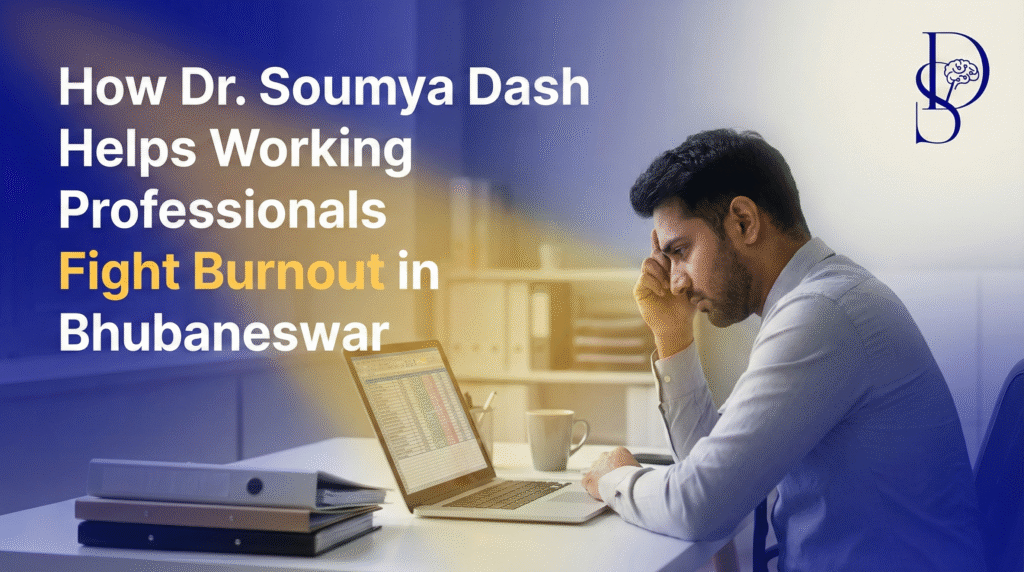
Burnout has become a serious mental health concern for many working professionals, and more people are now searching for reliable burnout help in Bhubaneswar. Long working hours, constant deadlines, high expectations, and lack of work-life balance are leaving individuals emotionally exhausted and overwhelmed. As a psychiatrist practicing in Bhubaneswar, I, Dr. Soumya Dash, regularly support professionals who are struggling with stress, anxiety, and burnout. 🧩 What Exactly Is Burnout? Burnout is not just “feeling tired.”It is a state of chronic physical and emotional exhaustion caused by prolonged stress at work. Burnout usually develops gradually and affects: Your motivation Productivity Emotional wellbeing Physical health Personal relationships Many people ignore the early signs, thinking it is just part of professional life. But untreated burnout can lead to serious anxiety, depression, and health problems. 💼 Why Professionals in Bhubaneswar Are More Vulnerable Bhubaneswar is growing rapidly as an IT, education, and business hub. With growth comes new pressures: Highly competitive work environments Job insecurity Long commutes Constant digital connectivity Targets and performance pressure Limited personal time Young professionals, corporate employees, doctors, teachers, entrepreneurs, and government employees—all face different kinds of mental strain. 🔴 Common Signs of Burnout Many people don’t realize they are experiencing burnout. Some major warning signs include: Emotional Symptoms Constant irritability Loss of interest in work Feeling helpless or trapped Anxiety and low mood Lack of motivation Physical Symptoms Frequent headaches Sleep problems Extreme tiredness Body pain Weak immunity Work-Related Symptoms Drop in productivity Difficulty concentrating Making frequent mistakes Avoiding responsibilities If these signs continue for weeks, it is time to take them seriously. 🩺 How Dr. Soumya Dash Helps Professionals Overcome Burnout At my clinic in Bhubaneswar, the approach to burnout is personalized and holistic. 1. Understanding the Root Cause The first step is not just treating symptoms but identifying: Work-related stressors Personal challenges Lifestyle issues Emotional patterns Every individual experiences burnout differently, so treatment must be customized. 2. Counseling and Therapy Through structured counseling sessions, professionals learn: Stress management techniques Healthy coping strategies Emotional regulation Time and priority management Ways to rebuild confidence Therapy provides a safe, non-judgmental space to talk openly about pressures and fears. 3. Lifestyle and Routine Correction Many burnout cases improve dramatically with: Better sleep habits Balanced daily routines Mindfulness practices Relaxation techniques Digital detox strategies Small changes often create big improvements. 4. Medical Support When Required In some cases, burnout leads to clinical anxiety or depression.When necessary, appropriate medication is advised along with therapy to help restore mental balance. Treatment is always ethical, minimal, and carefully monitored. 🌿 Practical Tips for Working Professionals While professional help is important, you can start with these simple steps: Set realistic daily goals Take regular breaks Learn to say “no” Avoid carrying work stress home Exercise or walk daily Reduce screen time after work Spend quality time with family Remember—rest is not a luxury, it is a necessity. 🤝 Why Seeking Help Is a Strength Many professionals hesitate to meet a psychiatrist due to stigma or fear. But asking for help is not a weakness—it is a smart and responsible decision. Early support can prevent: Chronic anxiety Depression Relationship conflicts Loss of career growth Serious health problems Your mental health deserves the same attention as your physical health. 🌈 A Message to Bhubaneswar’s Working Community Success should not come at the cost of peace of mind.You can be ambitious and mentally healthy at the same time. With the right guidance, burnout can be completely managed—and you can rediscover energy, confidence, and happiness in both your personal and professional life. 📞 Get Professional Help in Bhubaneswar If work stress or burnout is affecting your life, don’t wait for things to get worse. Consult Dr. Soumya Dash for expert mental health support. 📱 Phone: +91 9568830001📧 Email: care@remindcentre.com Clinic Address:N1, 270, CRP – DAV Rd,Block Number 4, Block N1,IRC Village, Nayapalli,Bhubaneswar, Odisha – 751015 Take the first step toward a healthier, stress-free life today.
Mental Health in Bhubaneswar: Why Stress, Anxiety & Burnout Are Rising in Urban Odisha
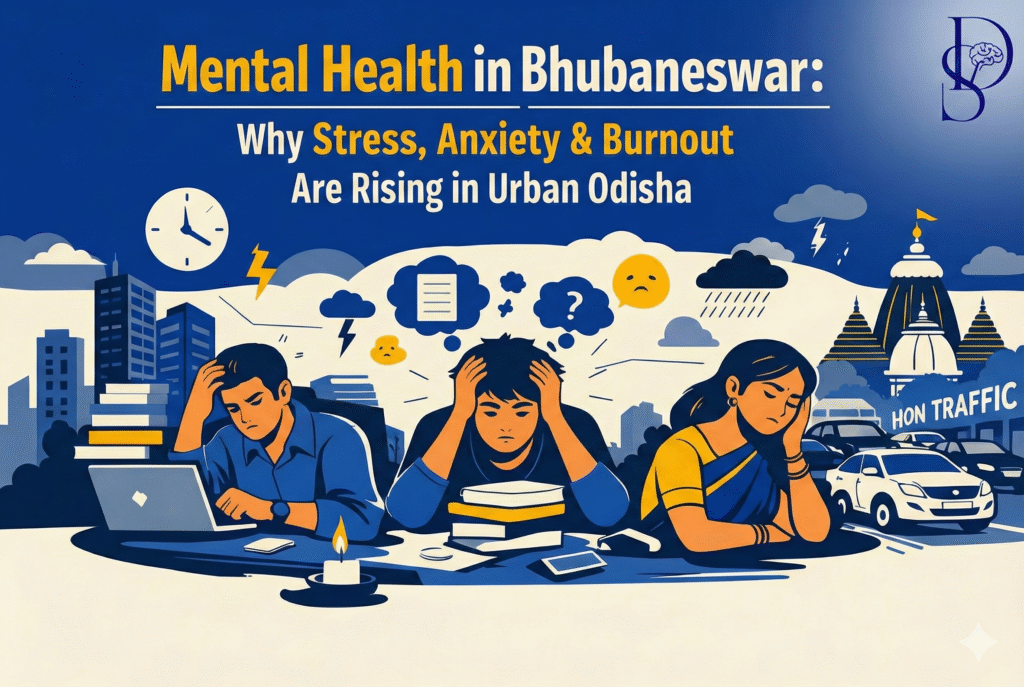
Bhubaneswar has rapidly evolved from a quiet temple city into a growing urban and professional hub. With expanding IT parks, educational institutions, and competitive workplaces, the pace of life has changed dramatically. While development brings opportunity, it has also introduced a silent rise in stress, anxiety, and burnout among residents of urban Odisha. Mental health challenges are no longer limited to a few—they affect students, working professionals, homemakers, and even retirees. Understanding why this rise is happening is the first step toward addressing it. 1. Rapid Urbanisation and Lifestyle Changes Bhubaneswar’s transformation into a smart city has brought longer working hours, increased screen time, and reduced physical activity. Many individuals now juggle demanding jobs, family responsibilities, and constant digital connectivity, leaving little room for rest or emotional processing. This constant mental stimulation often leads to chronic stress, disturbed sleep, and emotional exhaustion. 2. Academic and Career Pressure Among Youth Students in Bhubaneswar face intense academic pressure—from competitive entrance exams to career uncertainty. Parents often expect high performance, leaving little space for failure or emotional vulnerability. Over time, this pressure can manifest as anxiety disorders, low self-esteem, panic attacks, or burnout even at a young age. 3. Changing Family Structures Traditional joint family systems are gradually being replaced by nuclear families. While independence has its advantages, it also reduces emotional support systems. Many individuals hesitate to discuss mental health concerns at home due to fear of judgement or misunderstanding, leading to emotional isolation. 4. Cultural Stigma Around Mental Health In many Odia households, mental health issues are still misunderstood or dismissed as “overthinking” or “lack of willpower.” This stigma prevents people from seeking professional help early. Delayed intervention often worsens symptoms, making recovery more challenging. 5. Work-Life Imbalance and Burnout With increasing competition and job insecurity, professionals in Bhubaneswar often push themselves beyond healthy limits. Long hours, constant availability, and lack of boundaries contribute to burnout—a state of physical, emotional, and mental exhaustion. Burnout is not laziness; it is a serious mental health condition that requires attention. 6. When Should You Seek Help? You should consider professional mental health support if you experience: Persistent stress or anxiety Emotional numbness or irritability Sleep disturbances Loss of motivation or interest Difficulty managing daily responsibilities Seeking help early can prevent long-term mental health complications. Conclusion Mental health challenges in Bhubaneswar are real, growing, and deeply connected to modern urban living. Acknowledging these issues without shame is essential for individual and societal well-being. Mental health care is not a luxury—it is a necessity. With timely support, awareness, and compassionate care, individuals can regain balance, clarity, and emotional strength. 📞 Contact Details If you or your loved ones are experiencing mental health concerns, professional support is available. Call: +91 9568830001Email: care@remindcentre.comAddress: N1, 270, CRP – DAV Road, Block Number 4, Block N1IRC Village, Nayapalli, Bhubaneswar, Odisha – 751015
Doomscrolling and Mental Health: Setting Healthy Boundaries with Social Media
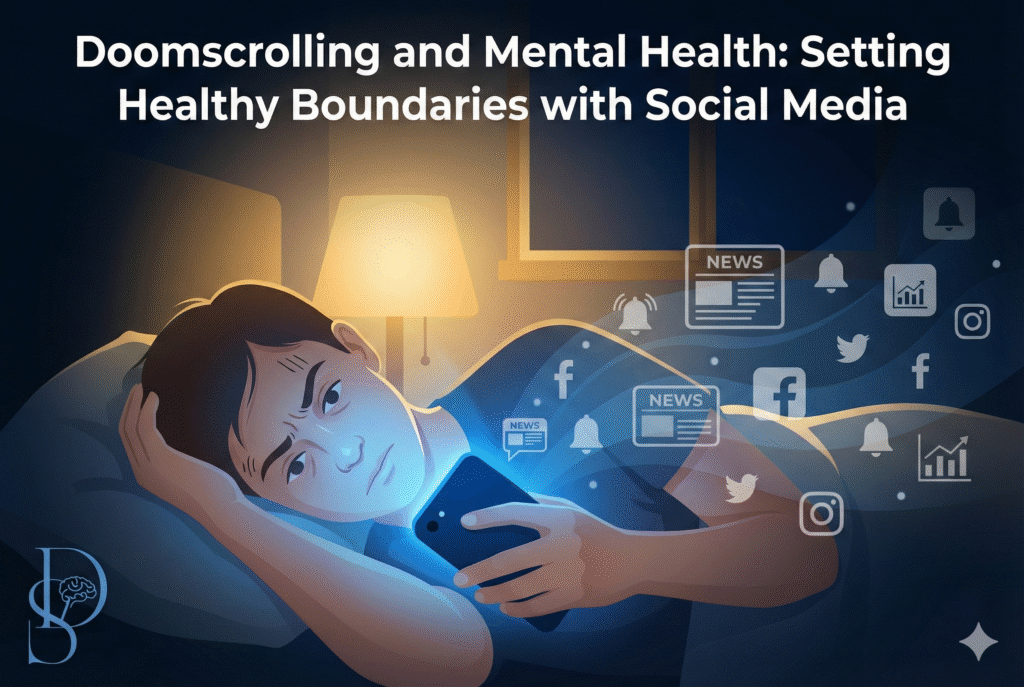
Doomscrolling and mental health are deeply connected, especially in today’s digital world where endless negative news is just a swipe away. When people scroll without stopping, their mind becomes overloaded with information, fear, and uncertainty. As a result, anxiety rises, sleep suffers, and emotional balance weakens. Understanding how doomscrolling affects mental wellness is the first step toward breaking the cycle. What is Doomscrolling and Why Do We Do It? Doomscrolling is precisely what it sounds like: endlessly scrolling through bad news, negative social media posts, or upsetting information. It’s driven by a few psychological factors: Negativity Bias: Our brains are wired to pay more attention to negative information because, from an evolutionary perspective, it signaled danger and potential threats. Uncertainty & Desire for Control: In times of crisis (pandemics, economic downturns, global conflicts), we scroll to gain more information, hoping that knowing more will give us a sense of control over uncontrollable situations. Fear of Missing Out (FOMO): There’s an underlying fear that if we disengage, we might miss crucial information or appear uninformed. Algorithmic Reinforcement: Social media algorithms are designed to keep us engaged. If you click on or dwell on negative content, the algorithm will show you more of it, creating a self-perpetuating cycle. How Doomscrolling Harms Our Mental Health The constant barrage of negative information has tangible effects on our brain and body: Heightened Anxiety and Stress: Continuous exposure to threats (even if they are distant) keeps our nervous system in a state of high alert, increasing cortisol levels and symptoms of generalized anxiety. Increased Depressive Symptoms: A feeling of helplessness, despair, and a loss of hope can deepen existing depressive tendencies or trigger new ones. Sleep Disturbances: Engaging with distressing content, especially before bed, activates the mind and nervous system, making it difficult to fall asleep and reducing sleep quality. Reduced Productivity and Focus: Mental exhaustion from doomscrolling can spill over into daily tasks, impairing concentration and motivation. Distorted Worldview: An overexposure to negative events can make the world seem much more dangerous and bleak than it actually is, leading to cynicism and social withdrawal. Empathy Burnout: While empathy is important, constantly absorbing the suffering of others without a means to act can lead to emotional exhaustion. Setting Healthy Boundaries with Social Media Breaking the doomscrolling habit requires conscious effort and strategic boundaries. Here’s how you can take back control: 1. Implement Time Limits and Scheduled Check-ins Designated News Times: Instead of constant checking, set specific times (e.g., 15 minutes in the morning, 15 minutes in the evening) to catch up on news from trusted sources. Use App Timers: Most smartphones have built-in “Digital Wellbeing” or “Screen Time” features that allow you to set daily limits for social media apps. Adhere to them strictly. No-Phone Zone: Make your bedroom a phone-free sanctuary, especially in the hour before sleep. This is perhaps the most critical boundary for improving sleep and reducing nighttime anxiety. 2. Curate Your Feed Intentionally Unfollow/Mute Negative Accounts: If certain accounts or news sources consistently make you feel anxious or angry, unfollow or mute them. You have control over what enters your digital space. Seek Out Positive Content: Actively follow accounts that promote positivity, provide uplifting content, or offer actionable solutions rather than just problems. Diversify Your Information Sources: Don’t rely solely on social media for news. Subscribe to reputable newsletters, read long-form articles, or listen to podcasts that offer balanced perspectives. 3. Engage in Mindful Consumption Ask Before You Click: Before opening an article or watching a video, ask yourself: “Will this information genuinely serve me, or is it likely to increase my anxiety?” Practice Self-Awareness: Pay attention to how you feel while scrolling. If you notice signs of tension, sadness, or restlessness, take it as a cue to disengage. Quality Over Quantity: Focus on understanding a few key developments from reliable sources rather than skimming countless headlines. 4. Replace the Habit with Positive Alternatives Engage in Hobbies: When you feel the urge to scroll, pick up a book, work on a craft, listen to music, or go for a walk. Connect with Loved Ones: Instead of passive scrolling, actively reach out to friends or family for genuine human connection. Practice Mindfulness: Incorporate short mindfulness exercises or meditation (even 5-10 minutes) into your day to train your attention away from distractions and back to the present. Conclusion While awareness of the world is important, relentless exposure to negativity without a break is detrimental to our mental health. By recognizing the trap of doomscrolling and actively implementing healthy boundaries, we can reclaim our peace of mind, reduce anxiety, and foster a more balanced and resilient relationship with social media and the news. Prioritizing your mental well-being in the digital age is not selfish; it’s essential. If you find that even with boundaries, social media and news consumption are significantly impacting your mental health, leading to persistent anxiety, depression, or sleep issues, it may be beneficial to consult with a mental health professional like Dr. Soumya Dash to explore personalized strategies and support.
A Day in the Life of a Psychiatrist
Mental health is one of the most important yet often misunderstood aspects of healthcare. Psychiatrists play a crucial role in diagnosing, treating, and supporting patients with mental health conditions. But what does a typical day look like for a psychiatrist? Let’s walk through it. Morning: Starting with Patient Consultations A psychiatrist’s day usually begins with scheduled outpatient appointments. These may include: During these sessions, psychiatrists listen carefully, ask targeted questions, and gather a complete picture of the patient’s mental, emotional, and physical health. Midday: Hospital Rounds or Case Reviews For psychiatrists who also consult in hospitals, midday might involve inpatient visits. These patients may need close monitoring due to severe mental illness, suicidal thoughts, or psychotic symptoms. Other psychiatrists use this time for: Afternoon: Therapy Sessions & Specialized Care Many psychiatrists provide therapy sessions alongside medication management. Some popular approaches include: They may also manage specialized cases, such as OCD, bipolar disorder, schizophrenia, or substance use disorders. Evening: Research, Documentation & Continuous Learning After patient interactions, a psychiatrist spends time on: Beyond the Clinic: Advocates for Mental Health Psychiatrists often engage in community outreach by conducting awareness talks, writing articles, or participating in campaigns to reduce stigma around mental illness. The Rewarding Side of Psychiatry While emotionally demanding, psychiatry is also deeply fulfilling. Helping someone regain control of their life, find hope, or heal from trauma is an experience that makes the profession worthwhile.